A Growing Population
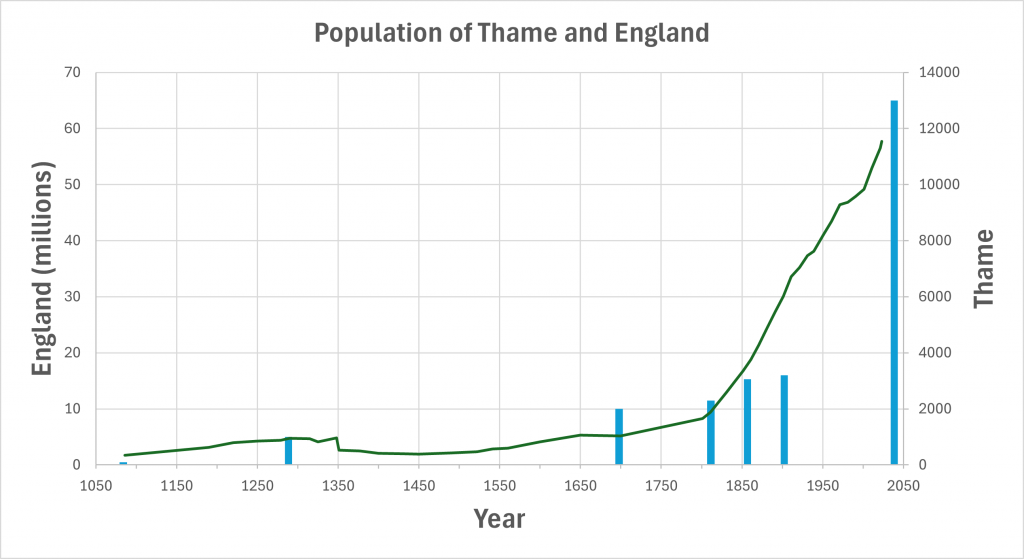
Thame’s small community of 103 working men (women and children were not counted) recorded in the Domesday book in 1086 grew rapidly over the next two hundred years, reaching its first thousand by 1300. A series of wars and plagues constrained growth over the following centuries, taking until 1700 to reach its second thousand. By 1850, this had grown to 3000.

Nationally, the population nearly doubled again between 1851 to 1900, but most of this growth was in towns and cities, and Thame’s population actually decreased by ten per cent in that time because of mass migration due to poor agricultural conditions.
Today, as a thriving market town, Thame’s population is nearing 13,000.